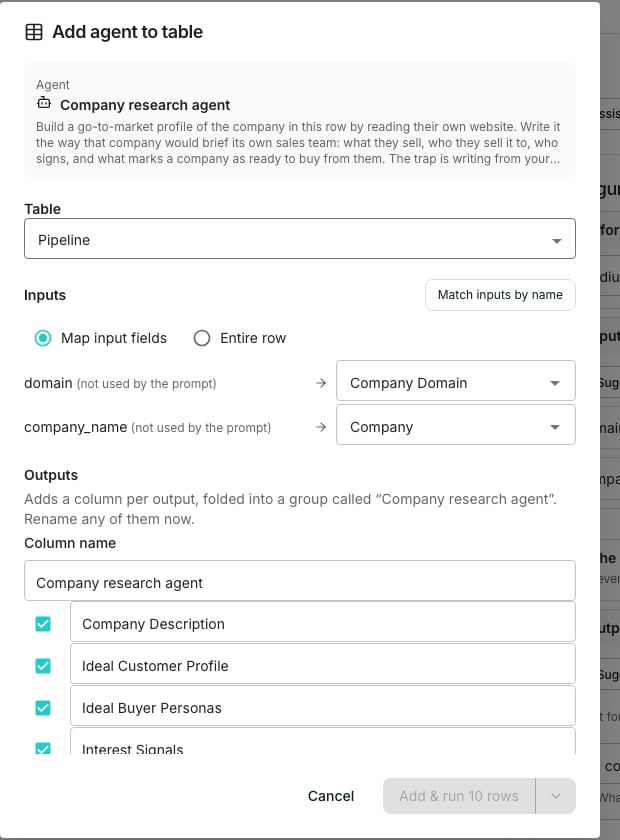
The Add agent to table dialog, mapping inputs and naming output columns.
Add an input
In the Configuration panel’s Inputs section, click Add input and name it. Suggest inputs from prompt reads the prompt and adds what it already asks for. To skip naming fields one at a time, turn on Use the whole row and the agent gets every column.Shape what it returns
The Outputs section declares the fields an answer is made of, either as repeatable named fields or, behind an advanced toggle, a raw schema. There are three ways to declare what the agent returns:- Add output names one field at a time. Give it a name and a type, then Add description if it needs more than a name to explain it.
- Suggest outputs from prompt proposes fields from what the prompt already promises to return.
- Switching from Fields to JSON Schema declares the output contract directly, checked against every strict-mode rule on save.
See each field get its own column
Click Add to table, choose a table, then map each input to a column. Match inputs by name fills in the obvious ones. An agent with one output field adds a single column. One with several folds them into a group behind a parent column, and you can rename or skip any field before adding it.Good to know
Can I deploy the same agent two different ways?
Can I deploy the same agent two different ways?
Yes. Deploying is a per column choice. Mapping columns on one table and handing over the whole row on another both work, as long as the prompt names no input.
When is Use the whole row offered at deploy time?
When is Use the whole row offered at deploy time?
Only when the prompt does not reference any input by name. Otherwise every input needs a column mapped to it, so the dialog maps rather than hands over the row.
What happens if a mapped column is empty?
What happens if a mapped column is empty?
The dialog warns you and runs will skip a row until that column is filled in or you remap it to another one.
Can I reorder output fields?
Can I reorder output fields?
Yes, by dragging the handle beside a field or using the arrow keys once it has focus. Order matters: it decides the order the fields fan out into columns.
What if two output fields want the same column name?
What if two output fields want the same column name?
Renaming is free text in the deploy dialog, so give each one a distinct name before adding the column. A collision with a name already on the table is refused.
Next steps
Build an agent
Start an agent and write the prompt these inputs and outputs belong to.
What agents cost
See how what an agent reads and returns affects the price.